Stainless Steel Sink: The Complete Guide Before You Buy
Introduction
Introduction
A kitchen sink works harder than almost any other fixture in your home. It handles hot water, sharp knives, heavy pots, and constant scrubbing, day after day. That is exactly why so many Indian homeowners now prefer a stainless steel sink over older materials like ceramic or granite composite.
If you are planning a kitchen upgrade or building a new home, this guide walks you through everything worth knowing, from the types available to pricing and where to buy safely online.
Why a Stainless Steel Kitchen Sink Makes Sense
A stainless steel kitchen sink brings together three qualities that most kitchens genuinely need: strength, hygiene, and low maintenance.
Unlike ceramic sinks that chip easily, stainless steel resists dents and cracks even under daily heavy use. It also does not stain or absorb odours, which matters a lot in Indian kitchens where turmeric, oil, and spices are part of everyday cooking.
Another reason homeowners lean toward stainless steel is hygiene. The surface does not have pores, so bacteria and grime cannot settle in the way they can with porous materials. A quick wipe after cooking keeps the sink looking new for years.
Heat resistance is a bonus too. You can place a hot pan straight from the stove into the sink without worrying about cracks or discolouration, something ceramic sinks simply cannot handle.
Types of Stainless Steel Sink You Can Choose From
Not every stainless steel sink is built the same way, and understanding the differences helps you avoid a poor purchase.
- Single bowl sinks suit compact kitchens where counter space is limited. They are easy to clean and work well for smaller households.
- Double bowl sinks are popular in mid to large kitchens because they let you wash dishes on one side while rinsing or draining on the other.
- Sinks with drainboards add an attached drying area, which is especially useful in Indian kitchens where air-drying utensils is common practice.
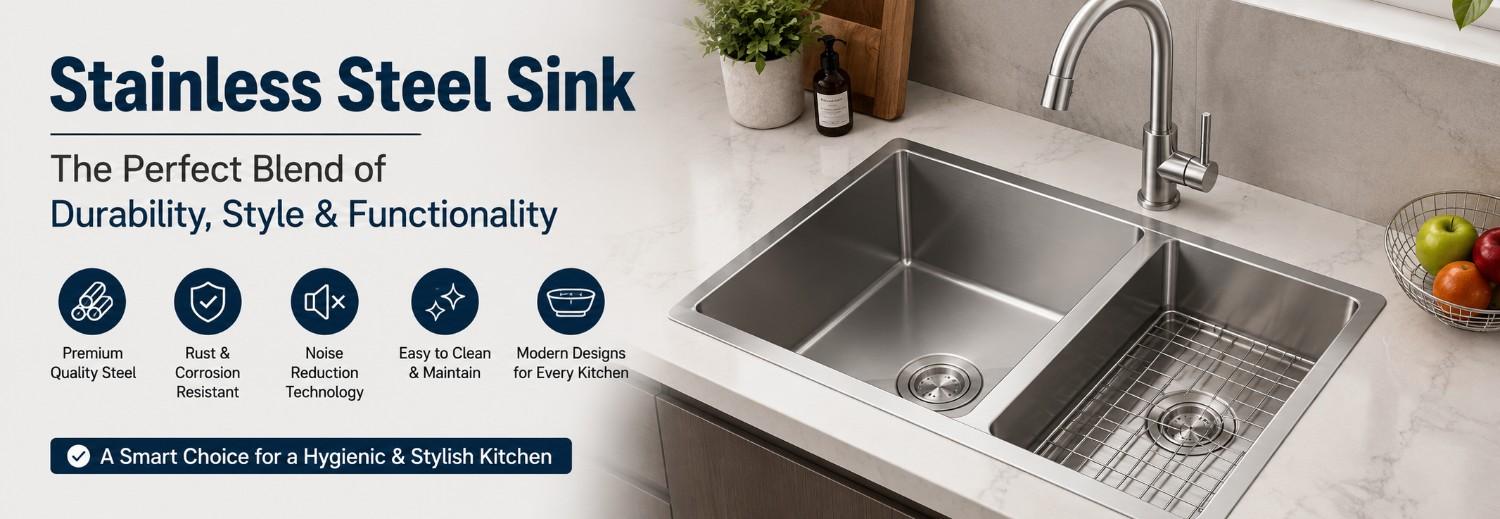
- Undermount sinks sit beneath the countertop for a seamless look, while topmount sinks rest above the counter and are simpler to install, making them a common choice for renovations.
The gauge, or thickness, of the steel also matters. A lower gauge number means thicker, more durable steel. Most quality kitchen sinks fall between 16 and 18 gauge, which offers a good balance of strength and noise reduction.
What Affects Stainless Steel Sink Price
The stainless steel sink price in India varies quite a bit depending on a few key factors, and it helps to know what you are actually paying for.
- Steel grade is the biggest factor. Sinks made from 304-grade steel cost more but resist rust and corrosion far better than cheaper 202-grade alternatives, which can develop rust spots within a couple of years.
- Thickness of the steel also drives price. Thicker gauge sinks are quieter, sturdier, and last longer, but they naturally cost more than thinner variants.
- Size and bowl configuration matter as well. A double bowl sink with a drainboard will always cost more than a basic single bowl unit simply because it uses more material and requires more manufacturing steps.
- Finish plays a role too. A matte or brushed finish tends to hide water spots and scratches better than a mirror finish, and this can slightly affect the price.
As a rough guide, basic single bowl sinks start at an entry-level price point, while premium double bowl sinks with drainboards and 304-grade steel sit at the higher end. It is always worth comparing the steel grade before comparing the price tag, since a cheaper sink made from low-grade steel often costs more in repairs and replacements down the line.
Buying a Stainless Steel Sink Online: What to Check
Shopping for a stainless steel sink online is convenient, but a few checks can save you from a disappointing purchase.
- First, confirm the steel grade mentioned in the product description. Reliable sellers clearly state whether the sink is 304 or 202 grade. If this detail is missing, it is worth asking before you order.
- Second, check the dimensions carefully against your countertop cutout size. Sinks that do not match the existing cutout can mean extra cutting work or a mismatched fit.
- Third, look at the mounting type, whether topmount or undermount, since this affects both installation and the final look of your countertop.
- Fourth, read genuine customer reviews rather than relying only on product photos. Reviews often reveal real-world details like noise levels, ease of cleaning, and how the finish holds up over time.
- Finally, check the warranty period offered. A brand confident in its manufacturing quality usually backs the sink with a reasonable warranty against rust and manufacturing defects.
Simple Maintenance Tips for a Long-Lasting Sink
A good stainless steel sink can last well over a decade with basic care.
Wipe the sink dry after use instead of letting water sit, since standing water can eventually cause water spots or mineral buildup. Avoid steel wool or abrasive scrubbers, as these can create fine scratches that trap dirt over time. A soft cloth with mild dish soap is usually enough for daily cleaning.
For stubborn stains, a paste of baking soda and water works well without damaging the finish. Occasional use of a stainless steel cleaner can also help maintain that original shine.
Stainless Steel Sink vs Other Materials
It helps to see how a stainless steel sink compares against the alternatives before making a final decision.
Granite composite sinks look elegant and resist scratches well, but they tend to cost significantly more and can chip at the edges if hit with a heavy vessel. Ceramic sinks offer a classic look but are heavy, prone to cracking, and difficult to repair once damaged.
Stainless steel strikes a practical middle ground. It is lighter than granite composite, easier to install, and far more forgiving of daily wear. It also does not fade or discolour over time the way some coloured composite sinks can after years of exposure to sunlight and heat.
For most Indian households, where budget and durability both matter, a stainless steel sink remains the more balanced choice.
Choosing the Right Size for Your Kitchen
Size is one detail that is easy to overlook until installation day. Measure the existing cutout or the available cabinet space before finalising a sink, since even a slight mismatch can lead to unwanted countertop modifications.
Standard single bowl sinks typically range between 18 to 24 inches in length, while double bowl variants can extend beyond 30 inches depending on the design. If your kitchen sees heavy daily cooking, a deeper bowl, generally above 8 inches, helps accommodate larger vessels and reduces splashing.
Also consider the placement of the tap and drainboard in relation to your window or cabinet layout, since this affects both convenience and the overall look of your kitchen counter.
Conclusion
A stainless steel sink is a practical, long-term investment for any Indian kitchen. It combines durability, hygiene, and easy upkeep in a way few other materials manage. Whether you choose a single bowl or a double bowl with a drainboard, paying attention to steel grade and thickness will help you pick a sink that performs well for years.
Before you buy a stainless steel sink online, take a few minutes to compare grades, sizes, and reviews. That small effort upfront can save you both money and frustration later.
FAQs
1. Which grade of stainless steel is best for kitchen sinks?
304-grade stainless steel is considered the best choice for kitchen sinks because it resists rust and corrosion far better than 202-grade steel, especially in humid conditions.
2. Is a single bowl or double bowl sink better for a small kitchen?
A single bowl sink usually works better for small kitchens since it takes up less counter space while still offering enough room for daily washing needs.
3. Does the price of a stainless steel sink depend on thickness?
Yes, thicker steel, indicated by a lower gauge number, generally costs more but offers better durability and less noise during use.
4. Can I install a stainless steel sink myself?
Topmount sinks are relatively easy to install and can be a DIY job with basic tools, but undermount sinks usually need professional installation for a proper seal.
5. How do I clean a stainless steel sink without scratching it?
Use a soft cloth with mild dish soap for regular cleaning, and avoid steel wool or harsh abrasives that can scratch the surface over time.