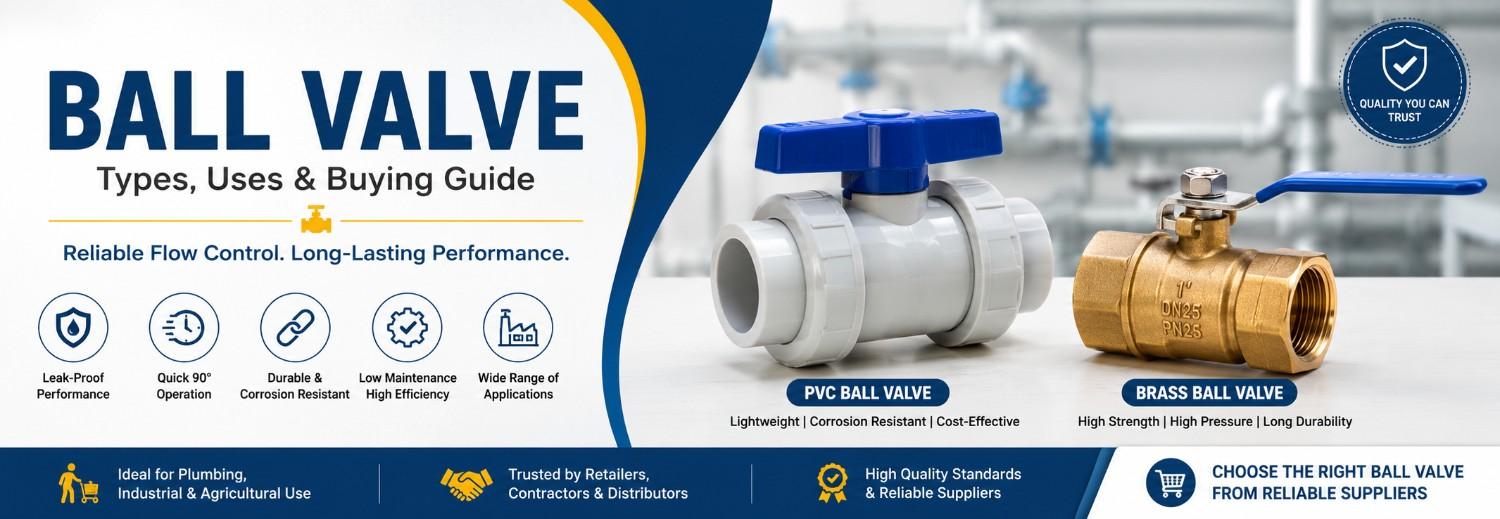
Ball Valve: A Complete Guide to Types, Uses, and Choosing the Right Supplier
Introduction
Introduction
Ball valves are one of the most used plumbing devices in residential, commercial and industrial piping. The ease of use, durability and reliability make them essential to use when controlling the flow of water and other fluids. It is important to know the various types of ball valves if you are a plumbing retailer, contractor, distributor, or a builder, so you can be able to help customers choose the perfect ball valve for their needs.
Let’s look at what is a ball valve, how does it work, types such as PVC Ball Valve and Brass Ball Valve, its applications, advantages, and how to hire a reliable Ball Valve Supplier.
What is Ball Valve?
A Ball Valve is a valve used to regulate the flow of liquid or gas in a pipeline that is capable of rotating a ball 90 degrees. It has a perforated ball in the body of the valve. The hole in the ball aligns with the pipeline when the handle is turned 90 degrees for fluid to flow. The handle is reversed which completely stops the flow.
The ball valves have the characteristics of quick operation, leak-proof sealing, and long service life. They are applied to water supply systems, plumbing systems, irrigation, industrial processes, commercial buildings.
How Does a Ball Valve Work?
The working mechanism of a ball valve is simple yet highly effective. The handle is connected to a rotating ball inside the valve.
- Open Position: The hole in the ball aligns with the pipe, allowing unrestricted flow.
- Closed Position: The solid side of the ball blocks the passage, stopping the flow completely.
This quarter-turn operation makes ball valves faster and easier to operate than many other types of valves.
Types of Ball Valves
PVC Ball Valve
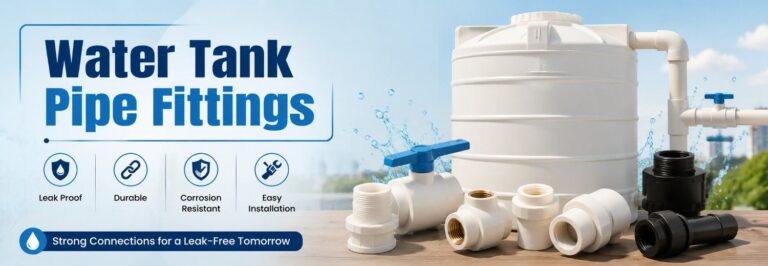
The PVC Ball Valve is made of the highest-quality polyvinyl chloride (PVC). These valves are light, corrosion resistant and perfect for water distribution systems.
Advantages of PVC Ball Valves
- Chemical and corrosion resistant.
- Easy to install and lightweight design
- Cost-effective solution
- Low maintenance requirements
- Long service life
- It is suitable for cold water applications.
Common Applications
- Residential plumbing
- Irrigation systems
- Swimming pools
- Water treatment plants
- Agricultural water supply
For its corrosion resistance and price, PVC ball valves are a good selection.
Brass Ball Valve
Brass Ball Valve is for high-pressure and high-temperature use. Brass is stronger, tenaciously holds its shape, and is very resistant to wear.
Advantages of Brass Ball Valves
- High mechanical strength
- Excellent durability
- Ideal for hot and cold water use
- Reliable sealing performance
- Resistant to rust and corrosion
- Long operational life
Common Applications
- Domestic plumbing
- Commercial buildings
- HVAC systems
- Industrial pipelines
- Gas distribution systems
Brass ball valves are most suitable for use when long-term performance and higher operating pressure is desired.
Benefits of Using Ball Valves
Ball valves have become one of the most popular plumbing products because they offer numerous benefits.
Fast Operation
The valve open/close action is immediate, with a simple ¼ turn of the handle, ideal for emergency shut-off.
Leak-Free Performance
High-quality ball valves provide excellent sealing, reducing the chances of water leakage.
Long Service Life
Their basic design reduces the amount of wear, so they will continue to work efficiently for a long time.
Low Maintenance
Ball valves are a type of valve that has a relatively short maintenance period in its life cycle.
Versatile Applications
Ball valves are suitable for use in residential, commercial, agricultural and industrial plumbing applications.
Cost-Effective
They are long-lasting and easy to maintain, making them a cost-effective option for retailers and end-users.
Factors to Consider When Buying a Ball Valve
The selection of the right ball valve depends on the application and operating condition.
Material
Use PVC for water systems that need to be lightweight, and brass for those that require high pressure and/or temperature.
Pressure Rating
Always make sure the valve can handle the pressure of the plumbing system.
Size
Select the appropriate valve diameter for the pipe diameter for optimal water flow.
End Connection
Threaded, socket or union-end connections are used for various installations.
Quality Certification
Buy goods that meet the appropriate quality standards to ensure their safety and reliability.
Choosing the Right Ball Valve Supplier
Retailers, distributors, and contractors will need to deal with a trusted Ball Valve Supplier. Using a trusted supplier guarantees consistent quality of the product, on-time delivery and reliable customer support.
Here are some points to take into account when choosing a supplier:
- Wide range of ball valve options
- Consistent product quality
- Industry certifications
- Competitive pricing
- Ready stock availability
- Reliable delivery network
- Responsive technical support
- Strong reputation in the plumbing industry
By forming a partnership with the right supplier, companies can ensure that their customers are satisfied and that they will reap greater rewards in the future.
Maintenance Tips
Ball valves are long-lasting when they are well-maintained.
- Use the valve from time to time to avoid sticking.
- Check for leaks and deterioration.
- Do not use too much force in turning the handle.
- If there is any damage to the seals, replace them.
- Use valves appropriate for the pressure and temperature.
Routine inspection provides for a reliable performance and lowers costs for unexpected maintenance.
Why Ball Valves Are Popular Among Retailers
Ball valves are one of the fastest moving plumbing products, creating a preference for them among plumbing retailers. They come in handy and are used in a variety of applications so they are a great asset for any plumber.
Ease of use, durability and reliable shut-off are appreciated by the customers. Retailers can stock quality PVC and brass ball valves to satisfy a range of homeowner, contractor, builder and industrial buyers.
Conclusion
The Ball Valve is an essential valve in modern plumbing systems and provide reliable flow control, durability, and easy operation. The choice between PVC Ball Valve and Brass Ball Valve depends on the specific application’s requirements, such as corrosion resistance or high-pressure performance, and selecting the appropriate product is crucial for achieving long-lasting results.
Retailers, distributors and contractors benefit from a trusted Ball Valve Supplier who can provide them with quality products with customer expectations. When businesses have a more clear understanding of the various types, applications and considerations, they can make better choices when purchasing and add increased value to their customers.
In the ever-changing world of plumbing, ball valves will continue to play an essential role in effective water management, making them a valuable investment for any plumbing company.
FAQs
1. What is a ball valve and how does it work?
A ball valve is a quarter-turn valve used to control the flow of water or other fluids. It contains a rotating ball with a hole through its center. When the handle is turned 90 degrees, the hole aligns with the pipe to allow flow, and turning it back blocks the flow completely.
2. What is the difference between a PVC ball valve and a brass ball valve?
A PVC ball valve is lightweight, corrosion-resistant, and ideal for cold water and chemical applications. A brass ball valve is stronger, more durable, and suitable for high-pressure and hot water systems. The choice depends on the application’s pressure, temperature, and fluid type.
3. How do I choose the right ball valve supplier?
When selecting a ball valve supplier, consider product quality, industry certifications, product range, competitive pricing, stock availability, delivery reliability, and after-sales support. A trusted supplier ensures consistent quality and timely delivery for retailers and contractors.
4. Where are ball valves commonly used?
Ball valves are widely used in residential plumbing, commercial buildings, industrial pipelines, irrigation systems, water treatment plants, HVAC systems, and agricultural applications. They provide reliable flow control and quick shut-off in various plumbing systems.
5. Why are ball valves preferred over other types of valves?
Ball valves are preferred because they provide quick quarter-turn operation, excellent leak-proof sealing, long service life, low maintenance, and reliable performance. Their simple design and durability make them a popular choice for plumbing, industrial, and water supply applications.