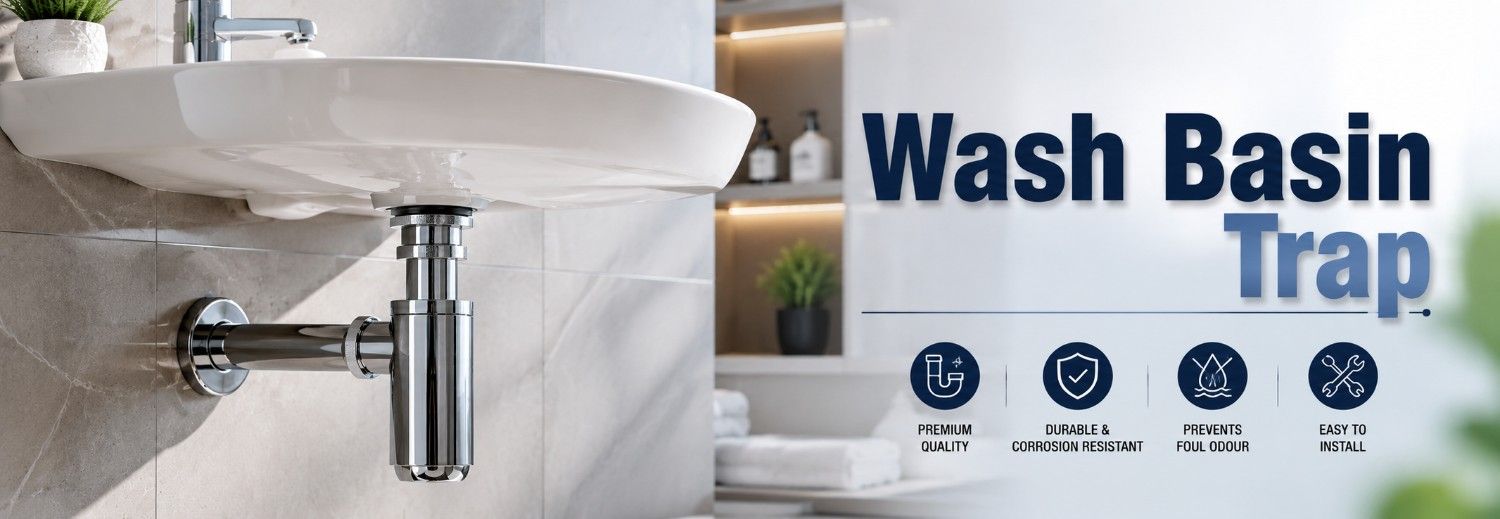
Wash Basin Trap: Types, Benefits, Sizes & Installation Guide (2026)
Introduction
Introduction
A wash basin trap is one of the most important plumbing components installed beneath a wash basin. Although it remains hidden, it plays a vital role in ensuring smooth drainage while preventing foul sewer gases and insects from entering your bathroom.
Whether you are renovating your home, installing a new wash basin, or upgrading your plumbing system, selecting the right wash basin trap improves drainage efficiency, hygiene, and long-term plumbing performance.
Among the various options available, PVC bottle traps have become the preferred choice because they are lightweight, corrosion-resistant, durable, and easy to maintain.
This guide covers everything you need to know about wash basin traps, including their purpose, types, sizes, materials, installation process, maintenance, and common problems.
What is a Wash Basin Trap?
A wash basin trap is a curved plumbing fitting installed below the basin outlet. After every use, it retains a small amount of water inside.
This water creates a water seal that:
- Prevents sewer gases from entering the bathroom
- Stops insects from coming through drainage pipes
- Allows wastewater to flow smoothly into the drainage system
Without a proper trap, unpleasant odors and pests can easily enter indoor spaces.
Why is a Wash Basin Trap Required?
A quality wash basin trap offers several benefits:
- Prevents sewer gases from entering buildings
- Maintains proper water flow
- Eliminates unpleasant bathroom odors
- Stops insects from entering through drainage pipes
- Improves plumbing hygiene
- Increases drainage efficiency
- Reduces maintenance requirements
- Extends the lifespan of plumbing systems
A wash basin drain trap is an essential component in both residential and commercial plumbing systems.
Types of Wash Basin Traps
Different plumbing layouts require different trap designs.
| Trap Type | Best For | Key Features |
|---|---|---|
| Bottle Trap | Modern bathrooms | Compact, stylish, easy to clean |
| P Trap | Wall outlet drainage | Excellent water seal |
| S Trap | Floor drainage systems | Suitable for floor outlet connections |
| Flexible Trap | Temporary installations | Adjustable and economical |
| PVC Bottle Trap | Residential bathrooms | Lightweight, corrosion-resistant, easy installation |
Among these, the PVC bottle trap has become one of the most popular choices due to its affordability and durability.
PVC Bottle Trap for Wash Basin
A PVC bottle trap features a bottle-shaped chamber that maintains an effective water seal while collecting small debris before it enters the drainage system.
Advantages
- Rust-free construction
- Lightweight
- Affordable
- Easy to clean
- Chemical resistant
- Long service life
- Leak-resistant joints
- Modern appearance
PVC bottle traps are especially suitable for residential bathrooms because they require minimal maintenance.
How Does a Wash Basin Drain Trap Work?
The wash basin trap operates using a simple water-seal mechanism.
Working Principle
- Wastewater flows from the basin into the trap.
- The trap fills with water.
- A small amount of water remains inside.
- This retained water creates a seal.
- The water seal blocks sewer gases from entering the bathroom.
- Fresh wastewater replaces old water while maintaining the seal.
This simple mechanism keeps bathrooms hygienic and odor-free throughout the year.
Standard Wash Basin Bottle Trap Sizes
Choosing the correct trap size ensures efficient drainage and leak-free installation.
| Bottle Trap Size | Common Application | Pipe Size |
|---|---|---|
| 32 mm | Small wash basins | Residential bathrooms |
| 40 mm | Standard wash basins | Homes and apartments |
| 50 mm | Commercial wash basins | Hotels, hospitals, offices |
Before Purchasing, Measure:
- Basin outlet diameter
- Wall drain connection
- Available installation space
- Pipe compatibility
Proper sizing improves drainage performance and prevents leakage.
Materials Used in Wash Basin Traps
Wash basin traps are available in different materials.
| Material | Features |
|---|---|
| PVC | Affordable, lightweight, corrosion-resistant, easy to install |
| Stainless Steel | Premium appearance, durable, rust-resistant |
| Brass | Strong construction, attractive finish, long lifespan |
| ABS Plastic | Lightweight, economical, suitable for residential use |
Among these, PVC offers the best balance between cost, durability, and maintenance.
How to Choose the Right Wash Basin Trap
Consider the following factors before purchasing:
1. Material
Choose high-quality PVC, stainless steel, or brass according to your budget and usage.
2. Installation Type
Determine whether your drainage outlet is through the wall or the floor.
3. Size
Ensure compatibility with the basin outlet and drain pipe.
4. Leak Resistance
Look for quality sealing washers and threaded joints.
5. Maintenance
Choose a trap that can be easily opened and cleaned.
6. Brand Quality
Purchase from trusted plumbing manufacturers with quality assurance.
Wash Basin Trap Installation Steps
Proper installation improves drainage performance and prevents leakage.
Step 1
Turn off the water supply if necessary.
Step 2
Connect the basin waste outlet to the trap.
Step 3
Secure the bottle trap firmly.
Step 4
Align the trap with the drain pipe.
Step 5
Tighten all threaded connections carefully.
Step 6
Turn on the water and inspect for leaks.
Note: Avoid over-tightening plastic fittings, as this may damage the threads.
Common Wash Basin Trap Problems
Like any plumbing component, wash basin traps may develop issues over time.
Slow Drainage
Usually caused by soap residue, hair, or debris buildup.
Bad Odor
Occurs when the water seal evaporates or the trap dries out.
Leakage
Often caused by loose fittings, damaged washers, or worn threads.
Blockage
Food particles, toothpaste residue, or other debris may obstruct water flow.
Routine cleaning helps prevent these problems.
Wash Basin Trap Maintenance Tips
Regular maintenance extends the life of your plumbing system.
- Flush the trap with warm water regularly.
- Remove accumulated debris every few months.
- Inspect threaded joints for leaks.
- Replace damaged washers immediately.
- Avoid disposing of solid waste into the basin.
- Do not use harsh or abrasive chemicals.
Simple maintenance can keep a wash basin trap functioning efficiently for many years.
Common Applications
Wash basin traps are widely used in:
- Residential bathrooms
- Hotels
- Schools
- Hospitals
- Office buildings
- Shopping malls
- Restaurants
- Commercial complexes
Their versatility makes them an essential part of modern plumbing systems.
Benefits of Installing a Quality Wash Basin Trap
Installing a high-quality wash basin trap provides long-term advantages:
- Better bathroom hygiene
- Improved drainage efficiency
- Prevention of sewer gas entry
- Lower maintenance costs
- Longer plumbing system lifespan
- Easier cleaning
- Reduced risk of blockages
- Enhanced bathroom safety
A reliable wash basin drain trap contributes significantly to an efficient plumbing system.
Conclusion
Although a wash basin trap is a small plumbing component, it plays a crucial role in maintaining a clean, odor-free, and efficient drainage system. Whether you choose a traditional P-trap, S-trap, or a modern PVC bottle trap, selecting the correct size, material, and installation method ensures long-lasting performance.
By performing regular maintenance, cleaning the trap periodically, and using high-quality plumbing products, homeowners can minimize leaks, prevent blockages, eliminate unpleasant odors, and maintain a dependable plumbing system for years to come.
Looking for more expert plumbing guides, product comparisons, installation tips, and maintenance advice? Visit Plumbing Advisor India for trusted information on plumbing solutions.
FAQs
1. What is the purpose of a wash basin trap?
A wash basin trap holds a small amount of water that blocks sewer gases from entering your bathroom while allowing wastewater to drain efficiently.
2. Why should I choose a PVC bottle trap for a wash basin?
A PVC bottle trap for wash basin is lightweight, corrosion-resistant, easy to install, affordable, and requires very little maintenance compared to metal alternatives.
3. What is the standard bottle trap for wash basin size?
The most common sizes are 32 mm, 40 mm, and 50 mm, depending on the wash basin outlet and plumbing requirements.
4. How often should a wash basin drain trap be cleaned?
Cleaning every three to six months is recommended, or sooner if you notice slow drainage, foul odors, or visible debris buildup.
5. Can I install a wash basin trap myself?
Yes, many PVC wash basin traps are designed for DIY installation. However, for the best results and leak-free performance, professional installation is recommended.