Bathroom Plumbing Material: A Complete Guide for a Durable & Leak-Proof Bathroom
When building or renovating a bathroom, choosing the right bathroom plumbing material is one of the most important steps. High-quality materials ensure smooth water flow, prevent leakages, and increase the lifespan of your entire plumbing system.
Modern homeowners prefer durable, corrosion-resistant, and cost-effective materials for long-term reliability. This guide covers the best plumbing materials, their features, and how to choose the right ones for a perfect bathroom setup.
Why Choosing the Right Bathroom Plumbing Material Matters
Bathroom plumbing faces constant:
- Water pressure
- Humidity
- Temperature changes
Using low-grade materials can cause:
- Frequent leakages
- Pipe cracks due to heat/cold
- Rust & corrosion
- Poor water flow
- Expensive repair work
Choosing high-quality pipes, fittings, traps, and valves ensures long-term performance and peace of mind.
Types of Bathroom Plumbing Materials
1. PVC Pipes (Polyvinyl Chloride)
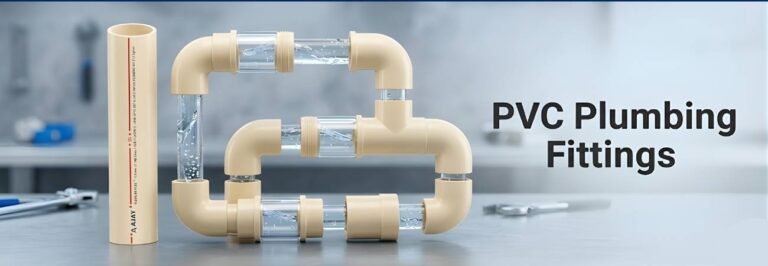
PVC pipes are the most popular for cold water supply, drainage, and waste discharge.
Benefits of PVC Pipes
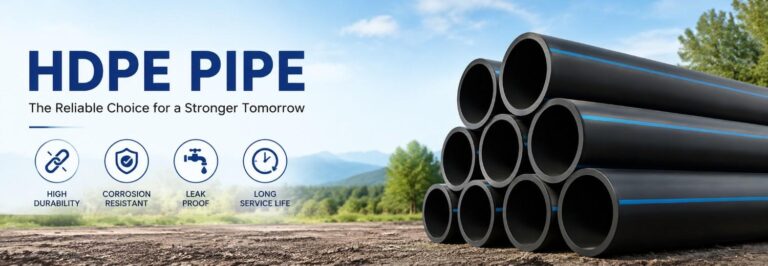
- Rust-proof & chemical-resistant
- Smooth inner surface for better flow
- Affordable & easy to install
- Long-lasting & maintenance-free
Best for: washbasin outlets, bathroom drains, vent systems.
2. CPVC Pipes (Chlorinated PVC)
CPVC is ideal for both hot and cold water supply and is commonly used in modern bathrooms.
Advantages of CPVC Pipes
- Handles hot water up to 93°C
- Resistant to corrosion & scaling
- Lifespan of over 50 years
- Leak-proof jointing system
Best for: geyser lines, shower pipelines, concealed plumbing.
3. UPVC Pipes (Unplasticized PVC)
UPVC pipes are used for cold water supply and concealed plumbing.
Benefits of UPVC Pipes
- High pressure-bearing capacity
- Non-toxic & drinking-water-safe
- Smooth flow with no sedimentation
- Strong & durable for concealed work
Essential Bathroom Plumbing Fittings
1. Elbows, Tees & Couplings
Used to change direction and connect multiple pipes. Durable, leak-proof fittings are essential.2. Valves (Ball Valve, Angle Valve)
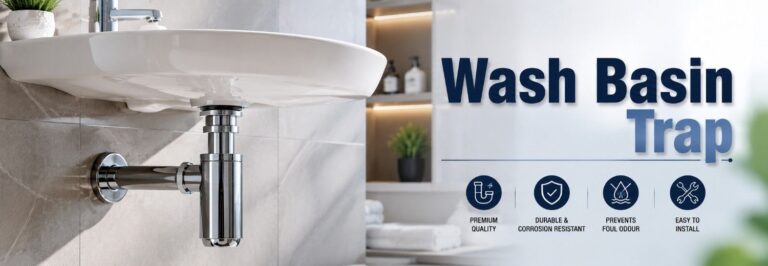
Used to change direction and connect multiple pipes. Durable, leak-proof fittings are essential.3. Traps (Bottle Trap, P-Trap, S-Trap)
Prevent foul smells from entering the bathroom.
Types of Traps
- P-Trap: For washbasins
- S-Trap: For toilets
- Bottle Trap: Easy to clean & maintain
4. Taps & Faucets maintain
Choose brass or stainless steel for long life and corrosion resistance.
5. Flexible Connectors
Used to connect faucets, health faucets, and geysers.
Stainless steel braided connectors are recommended.
Modern Plumbing Trends for Bathrooms
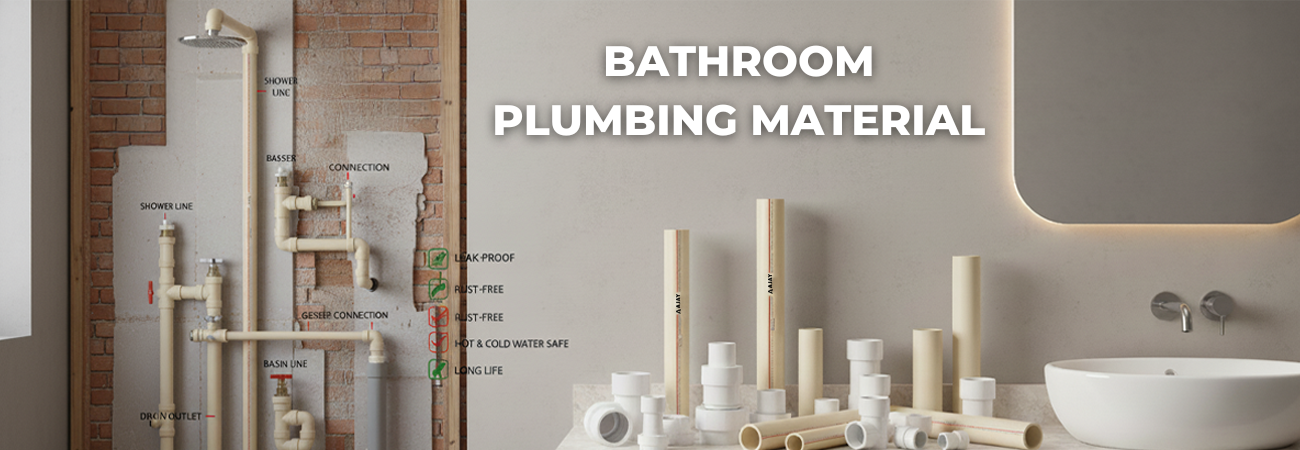
1. Concealed Plumbing Systems
Used to connect faucets, health faucets, and geysers. Provides a clean look. CPVC and UPVC are best for concealed use.2. Multi-Layer Composite Pipes (MLC)
Used in luxury bathrooms for high pressure & leak-free performance.
3. Anti-Microbial Pipes
Prevent bacterial growth and keep water hygienic.How to Choose the Best Bathroom Plumbing Material
Check water pressure & temperature
Choose rust-proof & corrosion-resistant materials
Select pipes suitable for both hot & cold water
Match fittings with the same pipe material
Prefer ISI-certified or branded products
Hire a professional plumber for installation
A perfect combination of pipes and fittings ensures your bathroom stays leak-proof & maintenance-free for years.
FAQs
1. Which material is best for bathroom hot water plumbing?
2. Are PVC pipes suitable for bathroom water supply?
PVC is good for drainage and cold water, but CPVC/UPVC is best for main supply lines.
3. Which trap is best for washbasins?
P-Trap or Bottle Trap.
4. What is the lifespan of CPVC/UPVC pipes?
More than 50 years if installed properly.
5. Can bathroom plumbing be concealed?
Yes, and UPVC/CPVC pipes work best for concealed systems.