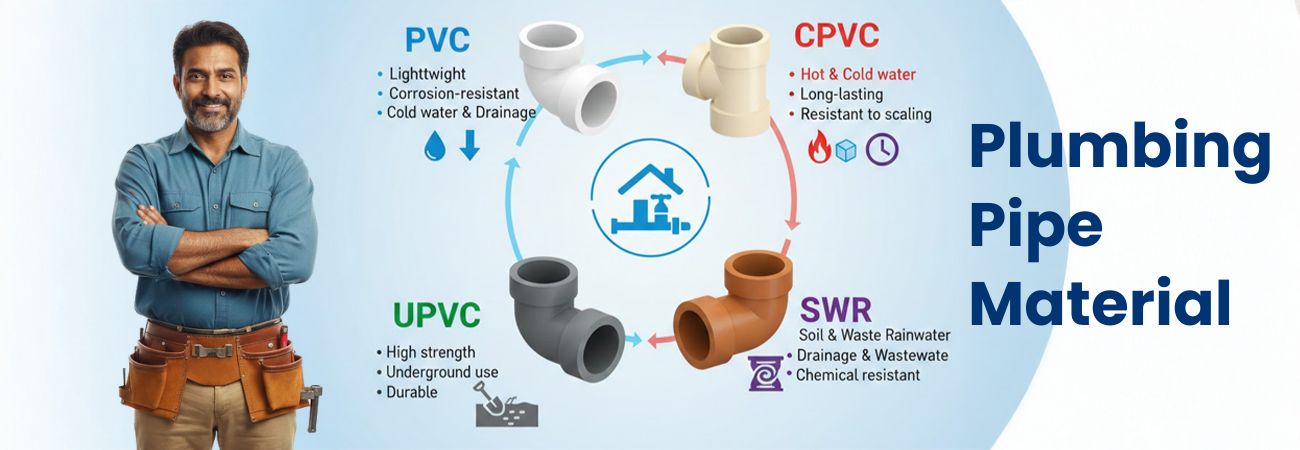
Plumbing Pipe Material: A Practical Guide for Reliable Plumbing Systems
Selecting the right plumbing pipe material is a crucial step in building a durable and efficient plumbing system. Whether it’s a residential home, apartment complex, commercial building, or renovation project, the type of pipe used directly impacts water quality, flow efficiency, maintenance needs, and overall system lifespan.
With multiple options available today, understanding the properties and applications of different pipe materials helps homeowners and professionals make informed decisions. This detailed plumbing pipes guide explains commonly used pipe materials, their advantages, and how to choose the best option for your needs.
Importance of Choosing the Right Plumbing Pipe Material
Plumbing pipes are responsible for carrying clean water and removing wastewater safely. Poor-quality or unsuitable pipe material can cause frequent leaks, contamination, pressure loss, and costly repairs.
Using the correct water supply pipe material offers several benefits:
- Consistent water flow
- Improved water hygiene
- Resistance to corrosion and scaling
- Long-term durability
- Lower maintenance costs
Modern plumbing focuses on safety, efficiency, and long service life, making material selection more important than ever.
Common Types of Plumbing Pipes Used Today
There are several types of plumbing pipes used in modern construction, especially plastic-based options that offer superior performance compared to traditional materials. Below are the most commonly used plumbing pipe materials.
PVC Pipes (Polyvinyl Chloride)
PVC pipes are among the most widely used plumbing materials due to their affordability and ease of installation.
Key Advantages:
- Lightweight and easy to handle
- Corrosion and chemical resistant
- Smooth internal surface for efficient flow
- Cost-effective solution
Suitable Applications:
- Drainage systems
- Wastewater lines
- Vent pipes
- Cold water supply
PVC pipes are ideal for non-pressurized and cold-water applications but are not recommended for hot water use.
CPVC Pipes (Chlorinated Polyvinyl Chloride)
CPVC pipes are an advanced version of PVC pipes and are specifically designed to handle higher temperatures.
Key Advantages:
- Suitable for hot and cold water
- Resistant to scaling and corrosion
- Maintains water quality
- Long operational life
Suitable Applications:
- Residential water supply
- Commercial plumbing systems
- Hot water lines
CPVC has become one of the most trusted water supply pipe materials for modern homes due to its balance of durability and affordability.
UPVC Pipes (Unplasticized Polyvinyl Chloride)
UPVC pipes are known for their rigidity and high strength, making them suitable for demanding plumbing conditions.
Key Advantages:
- High pressure-bearing capacity
- Resistant to UV rays and chemicals
- No rust or internal scaling
- Low maintenance
Suitable Applications:
- Potable water supply
- Underground pipelines
- Industrial plumbing systems
UPVC pipes are commonly used where strength, reliability, and long-term performance are required.
SWR Pipes (Soil, Waste, and Rainwater Pipes)
SWR pipes are specially designed for drainage and wastewater disposal.
Key Advantages:
- Lightweight yet strong
- Easy installation
- Resistant to chemicals and moisture
- Low maintenance
Suitable Applications:
- Bathroom drainage
- Rainwater disposal
- Soil and waste lines
SWR pipes ensure efficient wastewater flow and are essential in residential and commercial plumbing.
How to Choose the Best Plumbing Pipe Material
1. Application Type
Determine whether the pipe is required for water supply, drainage, or wastewater disposal.2. Water Temperature
Hot water lines require materials like CPVC, while cold water and drainage can use PVC or UPVC.3. Pressure Requirements
High-pressure systems need pipes with strong structural integrity.4. Installation Location
Underground, exposed, or concealed installations require different material properties.5. Budget and Longevity
Consider both initial cost and long-term maintenance when selecting pipes. Following this plumbing pipes guide ensures better system efficiency and fewer plumbing issues in the future.Common Mistakes to Avoid When Selecting Plumbing Pipes
- Using drainage pipes for water supply
- Ignoring pressure and temperature ratings
- Choosing low-quality fittings
- Mixing incompatible materials
- Prioritizing price over performance
Avoiding these mistakes helps maintain system reliability and water safety.
Trends in Modern Plumbing Pipe Materials
The plumbing industry is shifting toward advanced plastic piping solutions due to benefits such as:
- Longer lifespan
- Improved water hygiene
- Faster installation
- Reduced leakage risks
- Environment-friendly manufacturing
Materials like CPVC, UPVC, PVC, continue to dominate modern plumbing installations.
Conclusion
Choosing the right plumbing pipe material is essential for building a reliable, efficient, and long-lasting plumbing system. From water supply to drainage, each application demands a specific pipe type that can handle pressure, temperature, and environmental conditions without compromising performance or water quality. Modern plastic-based options such as PVC, CPVC, UPVC, and SWR pipes offer superior durability, corrosion resistance, and ease of installation, making them ideal for today’s plumbing needs.
Understanding the types of plumbing pipes, their suitable applications, and long-term benefits helps homeowners, builders, and plumbers avoid costly repairs and system failures. By selecting the correct water supply pipe material and following a structured plumbing pipes guide, you ensure safer water flow, reduced maintenance, and better overall plumbing efficiency.
FAQs
1. Which plumbing pipe material is best for home water supply?
CPVC pipes are widely preferred for home water supply due to their ability to handle both hot and cold water safely.
2. What are the most commonly used types of plumbing pipes today?
PVC, CPVC, UPVC, and SWR are the most common types of plumbing pipes used in modern construction.
3. Are plastic pipes durable for long-term use?
Yes, high-quality plastic pipes can last 25–50 years when installed and maintained correctly.
4. Which water supply pipe material is best for underground use?
UPVC pipes are ideal for underground installations due to their strength and resistance to external pressure.
5. Can the same pipe material be used for drainage and water supply?
No, drainage and water supply systems require different pipe specifications to ensure safety and performance.