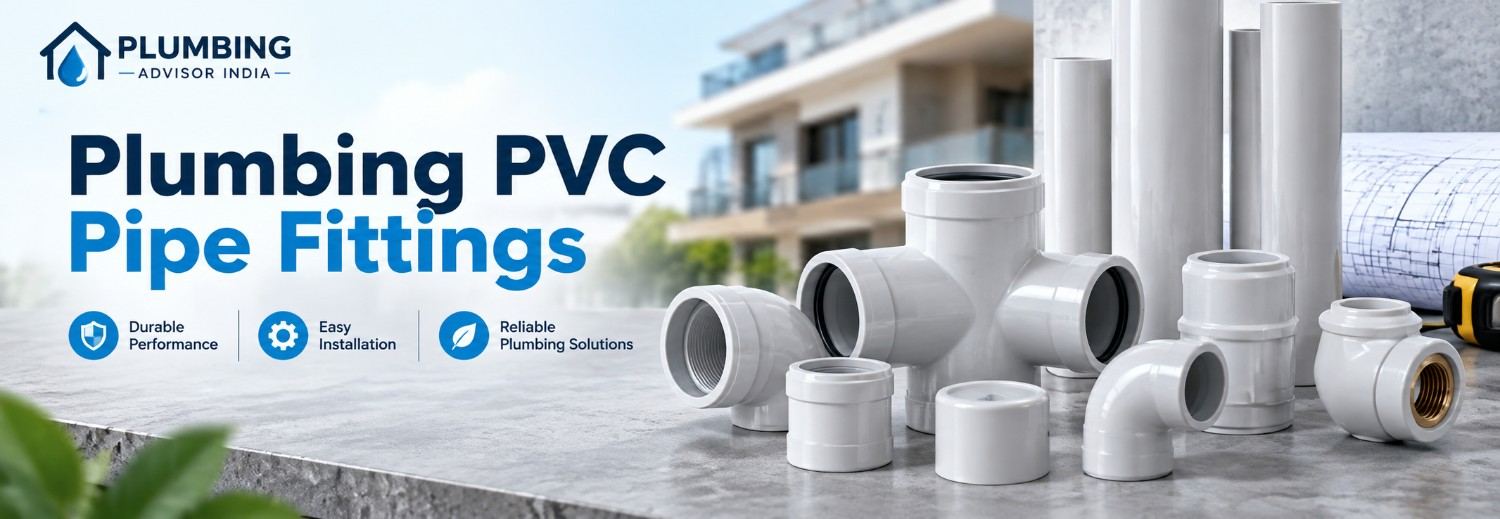
What Are Plumbing PVC Pipe Fittings? Types, Uses & Selection Guide
Introduction
When you look at a modern plumbing system, pipes usually get most of the attention. However, pipes alone cannot create a complete and functional water-supply or drainage network. Plumbing PVC pipe fittings play an equally important role by connecting pipes, changing their direction, controlling flow, and joining different pipe sizes.
From residential bathrooms and kitchens to commercial buildings and industrial installations, PVC fittings are widely used because they are lightweight, corrosion-resistant, easy to install, and comparatively economical.
But with so many fitting types and sizes available, choosing the right one can sometimes be confusing. This guide explains the major types of PVC fittings, their applications, a useful plumbing PVC pipe fittings chart, and practical tips for selecting the right fittings for your project.
What Are Plumbing PVC Pipe Fittings?
Plumbing PVC pipe fittings are components used to connect PVC pipes and create a complete plumbing network. PVC, or polyvinyl chloride, is a thermoplastic material commonly used for water distribution, drainage, irrigation, and other piping applications.
Unlike a straight pipe, a fitting performs a specific function. For example, an elbow changes the direction of water flow, while a reducer connects pipes with different diameters.
The correct combination of pipes and fittings helps create a system that is secure, efficient, and suitable for its intended application.
Why Are PVC Fittings Popular in Plumbing?
PVC fittings have become a common choice for many plumbing installations for several practical reasons.
1. Corrosion Resistance
PVC does not rust like conventional metal piping. This makes it useful in environments where moisture and corrosion could affect metallic components.
2. Lightweight Construction
PVC fittings are considerably easier to handle than many metal alternatives. This can make transportation, cutting, alignment, and installation more convenient.
3. Smooth Internal Surface
A smooth internal surface can help water move efficiently through the plumbing system while reducing areas where deposits may accumulate.
4. Easy Installation
Depending on the product and application, PVC fittings can be joined using appropriate solvent cement or mechanical connection methods. Proper preparation and installation remain essential for a reliable joint.
5. Low Maintenance
When correctly selected and installed for the intended service conditions, PVC plumbing systems generally require relatively little routine maintenance.
6. Wide Range of Designs
PVC fittings are available in numerous configurations and sizes, allowing plumbers to create complex pipe layouts without unnecessary modifications.
Common Types of Plumbing PVC Pipe Fittings
Understanding different fittings makes it easier to plan a plumbing installation.
PVC Elbow
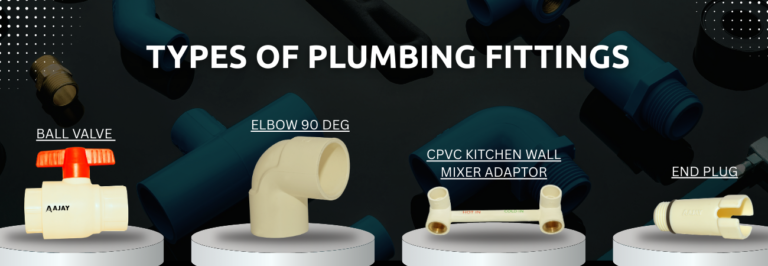
An elbow is used when the pipe needs to change direction. Common configurations include 45-degree and 90-degree elbows.
They are frequently used around corners, walls, bathroom fixtures, and other areas where a straight pipe run is not practical.
PVC Tee
A tee fitting has three openings and is generally used to create a branch from the main pipeline. It can be useful when supplying water to multiple outlets from a common line.
PVC Coupling
A coupling joins two pipes of the same or compatible diameter in a straight line. It is also useful when extending a pipe run or repairing a damaged section.
PVC Reducer
A reducer connects pipes with different diameters. It is particularly useful when a plumbing layout transitions from a larger pipeline to a smaller branch.
PVC Union
A union provides a detachable connection between pipe sections. It can be especially useful around equipment or components that may need to be removed for servicing.
PVC End Cap
An end cap closes the end of a pipeline. It may be used for terminating a pipe, temporarily closing a line, or completing certain plumbing arrangements.
PVC Adapter
Adapters are used when connecting PVC piping to components with a different connection type, such as threaded plumbing components or fixtures.
Plumbing PVC Pipe Fittings Chart
A simple plumbing PVC pipe fittings chart can help identify the purpose of commonly used fittings.
| PVC Fitting | Main Function | Typical Application |
|---|---|---|
| Elbow | Changes pipe direction | Corners and turns |
| Tee | Creates a branch | Water distribution |
| Coupling | Joins two pipes | Pipe extension or repair |
| Reducer | Connects different sizes | Size transition |
| Union | Allows detachable connection | Maintenance areas |
| End Cap | Closes pipe end | Pipeline termination |
| Adapter | Connects different connection types | Fixtures and equipment |
| Cross | Creates multiple branches | Complex plumbing layouts |
The exact fitting size, pressure rating, material specification, and joining method should always be matched to the pipe and application.
Where Are PVC Plumbing Fittings Used?
PVC fittings can be found in many plumbing environments.
Residential Plumbing
Homes commonly use fittings in bathrooms, kitchens, utility areas, and water-distribution systems. They help route pipes around walls, fixtures, and other structural elements.
Drainage Systems
PVC fittings are also commonly used to create bends, branches, and connections in drainage pipelines.
Irrigation
In gardens, agricultural applications, and landscaping systems, fittings help distribute water across different sections of an irrigation network.
Commercial Buildings
Offices, schools, hotels, hospitals, and retail buildings may use suitable PVC systems for specific water and drainage applications.
Industrial Applications
Certain PVC piping systems are used in industrial environments where their material characteristics are appropriate for the fluids, temperatures, pressures, and operating conditions involved.
PVC Fittings for Bathroom Plumbing
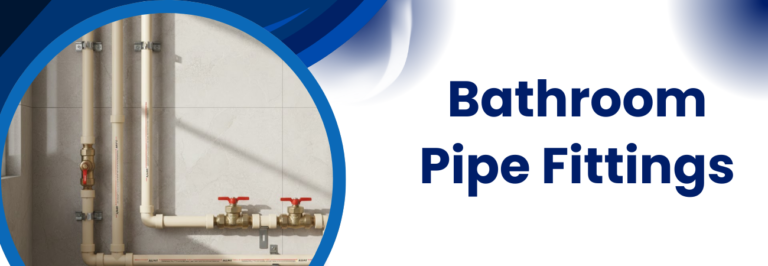
Bathrooms require careful planning because multiple fixtures often share limited space. Plumbing fittings help connect water supply and drainage lines while maintaining an organized layout.
Common bathroom applications include connections for wash basins, toilets, showers, floor drains, and other fixtures.
For example, an elbow may be used to route a pipe around a wall, while a tee can create a branch for another fixture.
Bathtub Fitting Plumbing: What Should You Consider?
Bathtub fitting plumbing requires attention to both water supply and drainage. The exact fitting arrangement depends on the bathtub design, fixture configuration, pipe sizes, and local plumbing requirements.
Before installation, consider:
- Correct pipe and fitting dimensions
- Compatibility between the fitting and pipe material
- Proper alignment of the drainage route
- Accessibility for maintenance
- Appropriate sealing or joining method
- Adequate drainage slope where required
- Manufacturer installation instructions
Using a fitting simply because it appears to fit can lead to leaks or poor system performance. The connection should be mechanically and dimensionally appropriate for the application.
How to Choose the Right PVC Pipe Fittings
Choosing fittings should be based on more than appearance or price. Consider the following factors.
Check the Pipe Size
Always verify the pipe’s nominal size and ensure the selected fitting is compatible with it.
Identify the Connection Type
Determine whether you need a socket, threaded, transition, or another connection arrangement.
Consider the Application
A fitting used for cold-water plumbing may have different requirements from one used for drainage or another specialized application.
Check Pressure and Temperature Requirements
Make sure the fitting is rated for the actual operating conditions of the plumbing system. Never assume that every PVC fitting is suitable for every temperature or pressure condition.
Select a Reliable Product
Consistent dimensions and appropriate material quality are important for proper installation. Buying from an established manufacturer or supplier can help ensure product traceability and specification consistency.
Common Mistakes to Avoid
Even a good-quality fitting can perform poorly if installed incorrectly.
Some common mistakes include:
- Choosing the wrong fitting size
- Mixing incompatible connection systems
- Applying unsuitable joining materials
- Failing to clean and prepare joint surfaces
- Misaligning connected pipes
- Ignoring operating temperature or pressure
- Installing fittings without considering future maintenance
- Selecting products only on the basis of low price
Following the manufacturer’s installation instructions is one of the simplest ways to reduce avoidable plumbing problems.
PVC Fittings vs Metal Fittings
PVC and metal fittings each have applications where they can be appropriate. PVC is often preferred when lightweight construction, corrosion resistance, and easy handling are important.
Metal fittings may be selected for applications requiring particular mechanical, temperature, or pressure characteristics.
The best choice depends on the complete system rather than simply choosing one material as universally better. Pipe material, fluid, operating conditions, installation environment, budget, and applicable standards should all be considered.
How Can You Improve the Life of PVC Plumbing Fittings?
Good installation is the foundation of a durable plumbing system. Avoid excessive force during assembly, support pipework appropriately, and prevent unnecessary stress on joints.
Regularly check accessible connections for signs of leakage. If a problem appears, identify its source rather than simply tightening or replacing random components.
For larger installations, professional inspection and maintenance can help identify issues before they develop into expensive repairs.
Conclusion
Plumbing PVC pipe fittings are small components, but they have a major role in creating a dependable plumbing system. Elbows, tees, couplings, reducers, adapters, unions, and end caps each solve a different installation requirement.
Whether you are planning residential plumbing, bathroom connections, drainage, irrigation, or another suitable application, selecting fittings according to pipe size, connection type, operating conditions, and manufacturer specifications is essential.
A reliable plumbing system starts with the right components and correct installation. For more information about PVC pipes, plumbing fittings, sizes, applications, and plumbing solutions in India, explore PlumbingAdvisorIndia and make your next plumbing decision with greater confidence.
FAQs
Plumbing PVC pipe fittings are used to connect PVC pipes, change flow direction, create branches, join different pipe sizes, terminate pipelines, and connect pipes to compatible plumbing fixtures or components.
A PVC elbow is generally used to change the direction of a pipeline. Common elbow configurations include 45-degree and 90-degree designs, depending on the required layout.
Check the nominal size and connection type of the pipe before selecting a fitting. The fitting should be dimensionally compatible with the pipe and appropriate for the intended pressure, temperature, and application.
Suitable PVC fittings can be used in many bathroom plumbing applications, including certain bathtub water-supply and drainage arrangements. Always verify material compatibility and follow the fixture and fitting manufacturer’s installation requirements.
Neither material is universally better. PVC can offer advantages such as corrosion resistance, low weight, and easy handling, while metal may be preferred for applications with specific mechanical, temperature, or pressure requirements.