Bathroom Cleaning Tools: The Ultimate Guide to Keeping Your Bathroom Spotless
Introduction
Introduction
A clean bathroom is essential for maintaining hygiene, improving comfort, and creating a pleasant home environment. However, keeping sinks, toilets, showers, tiles, and mirrors sparkling can be challenging without the right equipment. Choosing the best bathroom cleaning tools not only saves time but also helps remove stubborn stains, soap scum, mold, and hard water deposits more effectively.
In this guide, you’ll discover the most useful tools for bathroom cleaning, how to use them efficiently, and a comprehensive bathroom cleaning tools list to simplify your cleaning routine.
Why Investing in Quality Bathroom Cleaning Tools Matters
Bathrooms are exposed to constant moisture, making them vulnerable to bacteria, mildew, mold, and mineral buildup. Using appropriate cleaning tools offers several benefits:
- Improves overall hygiene and sanitation
- Makes cleaning faster and less labor-intensive
- Extends the life of bathroom fixtures and tiles
- Helps remove difficult stains without damaging surfaces
- Enhances the appearance and freshness of the space
Whether you’re cleaning your home or managing a commercial property, having reliable bathroom cleaning equipment can make a significant difference.
Essential Bathroom Cleaning Tools List
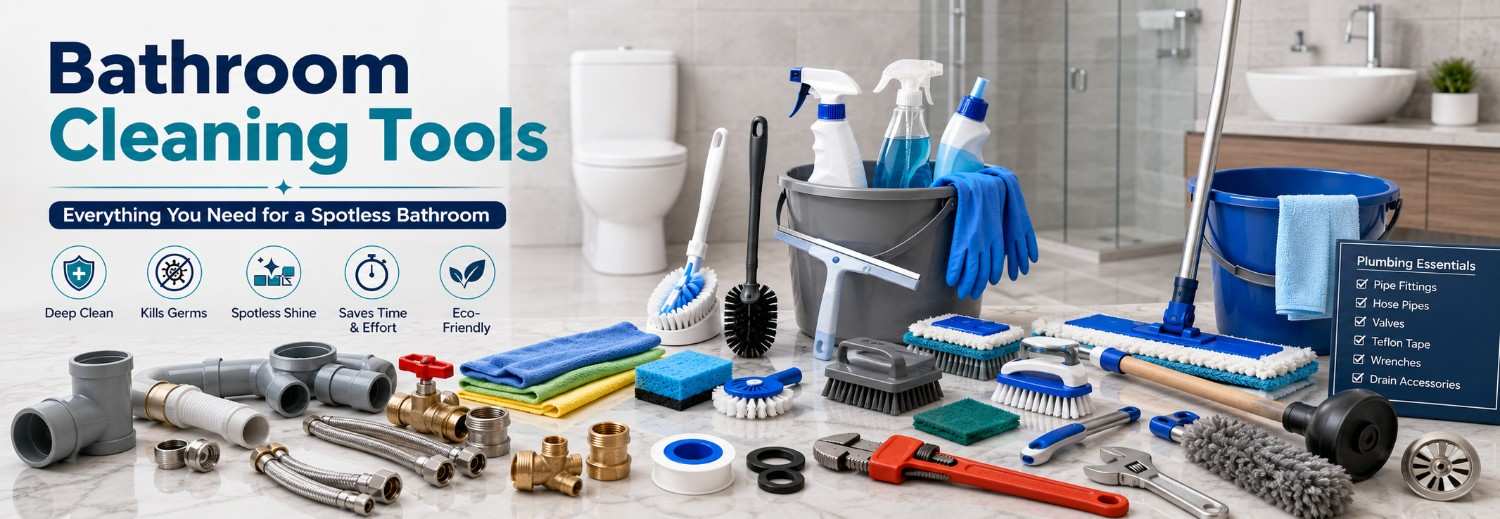
If you’re building your cleaning kit, consider including these essentials.
1. Toilet Brush
A durable toilet brush with firm bristles is indispensable for scrubbing the bowl and removing stains beneath the rim. Look for models with ergonomic handles and ventilated holders for better hygiene.
2. Scrub Brush
A handheld scrub brush is excellent for cleaning grout lines, tile joints, and textured surfaces where dirt tends to accumulate.
3. Microfiber Cloths
Microfiber cloths trap dust and absorb moisture without scratching delicate surfaces. They work well on mirrors, faucets, countertops, and glass partitions.
4. Sponge and Scouring Pad
Soft sponges are suitable for daily cleaning, while non-abrasive scouring pads help tackle soap residue and mineral deposits on sinks and tubs.
5. Squeegee
Using a squeegee after every shower minimizes water spots and soap buildup on glass doors and tiles, reducing the need for deep cleaning.
6. Mop with Replaceable Pads
Bathrooms require regular floor cleaning, and a microfiber mop efficiently removes dust, hair, and spills while reaching corners with ease.
7. Bucket
A lightweight bucket is useful for mixing cleaning solutions, rinsing cloths, and carrying supplies around the bathroom.
8. Spray Bottles
Reusable spray bottles help apply disinfectants, glass cleaners, or homemade vinegar solutions evenly across surfaces.
9. Rubber Gloves
Protective gloves shield your hands from chemicals, bacteria, and prolonged exposure to water during cleaning.
10. Extendable Duster
An extendable duster helps clean ceiling corners, exhaust fans, and light fixtures without requiring a ladder.
Best Bathroom Shower Cleaning Tools
Keeping shower areas spotless often requires specialized equipment because soap scum and hard water stains accumulate quickly. Some of the most effective bathroom shower cleaning tools include:
- Long-handled scrub brushes for reaching high walls
- Shower squeegees for daily maintenance
- Tile grout brushes for narrow spaces
- Microfiber pads for glass enclosures
- Corner cleaning brushes for hard-to-reach areas
- Handheld steam cleaners for sanitizing surfaces without harsh chemicals
Regular use of these tools helps prevent mold growth and keeps showers looking fresh.
Bathroom Cleaning Power Tools for Faster Results
Modern technology has introduced several bathroom cleaning power tools that reduce manual effort and improve cleaning efficiency.
Electric Spin Scrubber
These battery-powered devices feature rotating brush heads that remove grime from tiles, tubs, sinks, and grout with minimal effort.
Cordless Cleaning Brush
Cordless brushes offer flexibility when cleaning walls, corners, and shower stalls without worrying about tangled cables.
Steam Cleaner
Steam cleaners sanitize surfaces using high-temperature steam, making them ideal for removing bacteria and loosening stubborn dirt while reducing reliance on chemicals.
Power Drill Brush Attachments
Brush attachments designed for standard drills can scrub tile floors, grout, and bathtubs much faster than manual brushing.
Wet and Dry Vacuum
For larger bathrooms, wet and dry vacuums efficiently collect water, dust, and debris while speeding up floor maintenance.
Tips for Choosing the Right Bathroom Cleaning Tools
Selecting suitable cleaning tools depends on your bathroom size, materials, and cleaning habits. Keep these factors in mind:
- Choose ergonomic designs for comfortable handling.
- Opt for durable materials that resist moisture.
- Select washable or replaceable cleaning heads.
- Consider multifunctional tools to save storage space.
- Use non-scratch materials for delicate surfaces like glass and polished fixtures.
Investing in quality products often leads to better long-term performance and lower replacement costs.
Daily Bathroom Cleaning Routine
Maintaining cleanliness doesn’t always require extensive scrubbing. A few simple habits can keep your bathroom fresh:
- Wipe countertops after use.
- Use a squeegee on shower glass daily.
- Rinse sinks and tubs after heavy use.
- Hang towels to dry properly.
- Empty trash bins regularly.
- Disinfect high-touch surfaces frequently.
Small daily tasks reduce deep-cleaning time significantly.
Weekly Deep Cleaning Checklist
For a more thorough clean, dedicate time each week to:
- Scrubbing the toilet bowl and seat
- Cleaning shower walls and glass doors
- Washing mirrors with microfiber cloths
- Mopping floors thoroughly
- Removing dust from vents and shelves
- Cleaning faucets and fixtures
- Scrubbing grout where necessary
- Disinfecting handles and switches
Combining proper techniques with an organized bathroom cleaning tools list makes this routine easier and more effective.
Eco-Friendly Bathroom Cleaning Practices
Many homeowners prefer environmentally friendly cleaning methods. You can reduce waste and chemical use by:
- Using reusable microfiber cloths instead of disposable wipes
- Refilling spray bottles rather than purchasing single-use products
- Cleaning with diluted vinegar for mineral deposits
- Using baking soda as a gentle abrasive
- Selecting long-lasting tools with replaceable components
These practices support sustainability while maintaining excellent cleaning performance.
Common Mistakes to Avoid
Even with the best bathroom cleaning tools, certain mistakes can reduce effectiveness:
- Using overly abrasive brushes on delicate surfaces
- Ignoring grout until mold develops
- Mixing incompatible cleaning chemicals
- Forgetting to clean the cleaning tools themselves
- Allowing moisture to remain after shower use
Proper maintenance of both your bathroom and your equipment ensures consistently better results.
Conclusion
The right bathroom cleaning tools can transform a time-consuming chore into a quick and manageable routine. From basic brushes and microfiber cloths to advanced bathroom cleaning power tools, every item serves a purpose in keeping your space hygienic and visually appealing. Incorporating specialized bathroom shower cleaning tools and maintaining a practical bathroom cleaning tools list ensures you’re prepared for everyday maintenance and deep cleaning alike.
By investing in high-quality equipment and following consistent cleaning habits, you can enjoy a cleaner, healthier, and more inviting bathroom throughout the year.
FAQs
1. What are the must-have bathroom cleaning tools for every home?
Essential tools include a toilet brush, scrub brush, microfiber cloths, squeegee, mop, sponge, bucket, spray bottle, rubber gloves, and grout brush.
2. Which bathroom shower cleaning tools work best on glass doors?
A combination of a squeegee, microfiber cloth, non-abrasive sponge, and long-handled scrub brush helps remove soap scum and water spots effectively.
3. Are bathroom cleaning power tools worth buying?
Yes. Electric spin scrubbers, steam cleaners, and drill brush attachments can reduce cleaning time and make it easier to tackle stubborn grime with less physical effort.
4. How often should bathroom cleaning tools be replaced?
Replace tools when bristles wear down, microfiber cloths lose effectiveness, or sponges develop odors or damage. Regular cleaning and drying can extend their lifespan.
5. How can I keep my bathroom cleaner between deep cleans?
Wipe surfaces daily, use a shower squeegee after each use, ventilate the room to reduce moisture, and address spills or stains promptly to prevent buildup.