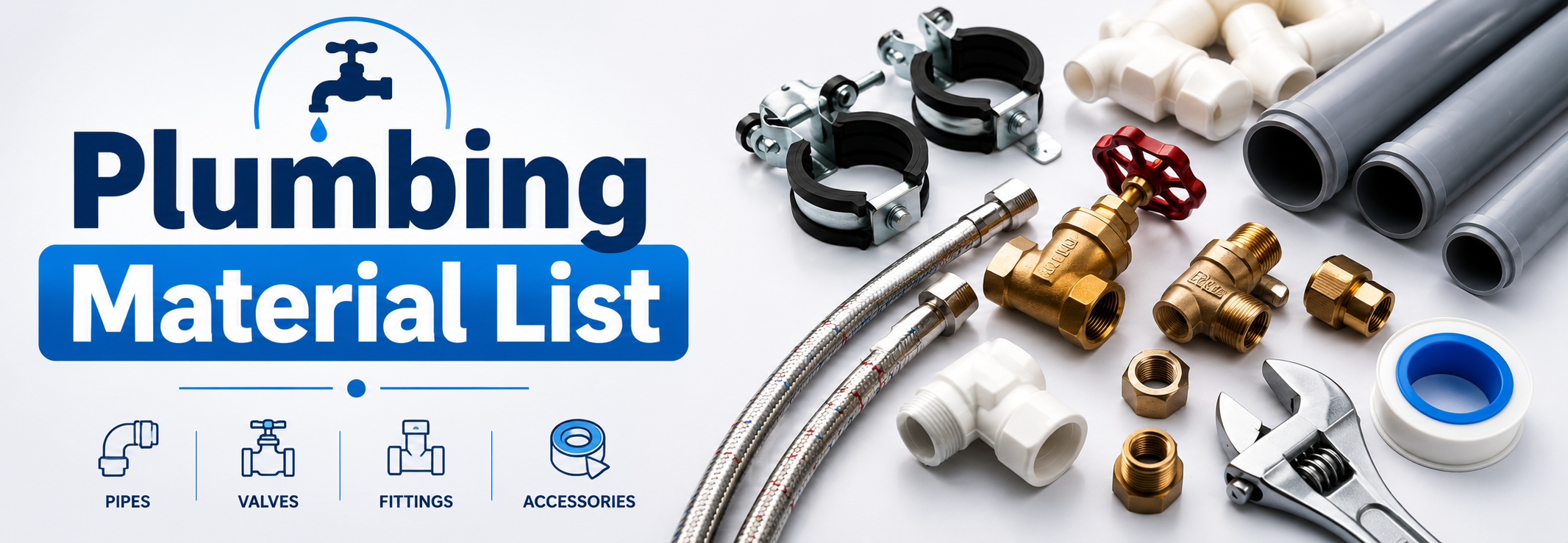
Plumbing Material List: Essential Plumbing Items, Fittings & Tools for Every Project
Introduction
Introduction
Plumbing plays a major role in every residential, commercial, and industrial building. Whether you are constructing a new home, renovating a bathroom, or repairing a water supply system, having a complete plumbing material list helps ensure smooth installation and long-lasting performance. From pipes and fittings to tools and accessories, every plumbing project requires the right materials for efficient water flow and leak-free connections.
In this detailed guide, we will explore the most important plumbing materials, essential fittings, and commonly used plumbing tools. This blog also includes a complete plumbing items list, a useful plumbing fittings list, and insights into plumbing tools and materials required for professional and DIY plumbing work.
What is a Plumbing Material List?
A plumbing material list is a complete inventory of products and tools required for plumbing installations, repairs, and maintenance. It includes pipes, fittings, valves, fixtures, adhesives, sealants, and plumbing tools used in water supply and drainage systems.
A proper plumbing materials checklist helps:
- Avoid material shortages during installation
- Improve project planning
- Reduce plumbing errors
- Save time and cost
- Ensure durable plumbing systems
Complete Plumbing Items List for Homes
Below is a comprehensive plumbing items list commonly used in homes and buildings.
1. Pipes
Pipes are the foundation of every plumbing system. Different types of pipes are used for hot water, cold water, drainage, and gas supply.
Common Types of Pipes
PVC Pipes
PVC pipes are widely used for drainage and cold water applications. They are lightweight, durable, and corrosion-resistant.
CPVC Pipes
CPVC pipes are suitable for hot and cold water supply systems because they can handle high temperatures.
UPVC Pipes
UPVC pipes are commonly used for water distribution and agricultural applications due to their strength and chemical resistance.
HDPE Pipes
HDPE pipes are flexible and ideal for underground water supply systems.
GI Pipes
Galvanized Iron pipes are strong metal pipes used in industrial and commercial plumbing systems.
2. Pipe Fittings
Pipe fittings connect pipes and control water flow direction. A good plumbing fittings list is essential for efficient installation.
Important Plumbing Fittings List
Elbows
Used to change the direction of pipe flow at 45° or 90° angles.
Tees
Tees divide or combine water flow into multiple directions.
Couplers
Couplers connect two pipes together.
Reducers
Reducers connect pipes of different diameters.
Unions
Unions allow easy pipe disconnection during maintenance.
Adapters
Adapters connect different types of pipes and fittings.
Nipples
Short pipe sections used to connect fittings.
Caps and Plugs
Used to seal pipe ends.
Valves
Valves regulate water flow and pressure.
Essential Plumbing Valves
Valves are critical for controlling water movement in pipelines.
Ball Valves
Provide quick shut-off control.
Gate Valves
Used for full flow control in water pipelines.
Check Valves
Prevent reverse water flow.
Angle Valves
Installed near sinks and toilets for fixture control.
Pressure Relief Valves
Protect plumbing systems from excess pressure.
Plumbing Fixtures List
Plumbing fixtures are visible components connected to water systems.
Common Plumbing Fixtures
- Wash basins
- Kitchen sinks
- Bathtubs
- Showers
- Toilets
- Faucets
- Water taps
- Flush tanks
- Bidets
- Urinals
Choosing quality plumbing fixtures improves water efficiency and enhances bathroom aesthetics.
Plumbing Tools and Materials Required
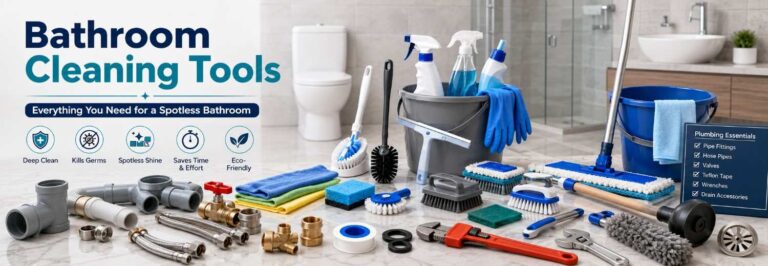
Professional plumbers use several specialized tools for installation and repair work. Understanding essential plumbing tools and materials can improve work efficiency.
Important Plumbing Tools
Pipe Wrench
Used for gripping and tightening pipes.
Adjustable Spanner
Helps tighten nuts and bolts.
Pipe Cutter
Cuts metal and plastic pipes accurately.
Hacksaw
Useful for manual pipe cutting.
Plunger
Used to clear drain blockages.
Teflon Tape
Prevents leakage in threaded joints.
Measuring Tape
Ensures accurate pipe measurements.
Pipe Threading Machine
Creates threads on metal pipes.
Drain Cleaning Snake
Removes clogs from drainage systems.
Basin Wrench
Used for tightening sink fittings.
Adhesives and Sealants in Plumbing
Sealants and adhesives help create leak-proof pipe connections.
Common Plumbing Materials
Solvent Cement
Used for joining PVC and CPVC pipes.
Silicone Sealant
Provides waterproof sealing around fixtures.
Epoxy Putty
Repairs pipe leaks and cracks.
Rubber Gaskets
Prevent leakage in joints and valves.
Drainage Plumbing Materials List
Drainage systems remove wastewater efficiently from buildings.
Essential Drainage Materials
- PVC drainage pipes
- Floor traps
- Vent pipes
- Drain covers
- Waste coupling
- Sewer pipes
- Inspection chambers
- Manhole covers
A proper drainage setup prevents waterlogging and foul odor issues.
Bathroom Plumbing Material List
Bathrooms require a wide range of plumbing products.
Bathroom Plumbing Items List
- Shower mixer
- Health faucet
- Basin mixer
- Toilet seat
- Flush valve
- Floor drain
- Flexible hose
- Angle cock
- Pipe connectors
- CP fittings
Using premium bathroom plumbing materials ensures durability and water efficiency.
Kitchen Plumbing Materials List
Kitchen plumbing systems require durable materials because of frequent water usage.
Common Kitchen Plumbing Materials
- Sink pipes
- Kitchen faucets
- Waste pipes
- Water filters
- Flexible connectors
- Drain strainers
- Stop valves
Proper kitchen plumbing helps maintain hygiene and smooth drainage.
Factors to Consider Before Buying Plumbing Materials
Choosing the right plumbing products is important for long-term performance.
1. Material Quality
Always select high-quality pipes and fittings from trusted manufacturers.
2. Water Pressure Compatibility
Ensure pipes can withstand the required pressure levels.
3. Temperature Resistance
Hot water systems require heat-resistant materials like CPVC.
4. Corrosion Resistance
Use corrosion-resistant pipes for better durability.
5. Budget
Compare prices while maintaining quality standards.
6. Brand Reputation
Trusted plumbing brands offer certified and durable products.
Importance of Using Quality Plumbing Materials
Investing in premium plumbing materials provides multiple benefits.
Leak Prevention
Quality fittings reduce leakage risks.
Longer Lifespan
Durable materials offer years of trouble-free service.
Better Water Flow
Smooth interior pipe surfaces improve water pressure.
Reduced Maintenance
Reliable plumbing systems require fewer repairs.
Safety
Certified materials ensure safe drinking water supply.
Modern Trends in Plumbing Materials
The plumbing industry continues to evolve with advanced products and technologies.
Eco-Friendly Plumbing
Water-saving fixtures and sustainable pipes are becoming popular.
Smart Plumbing Systems
Smart leak detectors and automatic shut-off valves improve safety.
High-Performance Pipes
Modern CPVC and HDPE pipes offer better durability and flexibility.
Modular Plumbing
Prefabricated plumbing systems reduce installation time.
Tips for Maintaining Plumbing Materials
Regular maintenance helps extend the life of plumbing systems.
- Inspect pipes regularly for leaks
- Clean drains periodically
- Avoid chemical drain cleaners
- Replace damaged fittings immediately
- Check water pressure levels
- Use proper plumbing tools during repairs
Proper maintenance reduces repair costs and prevents water damage.
Conclusion
A well-planned plumbing material list is essential for successful plumbing installations and repairs. From pipes and valves to fixtures and tools, every component plays an important role in ensuring efficient water supply and drainage systems.
Understanding the complete plumbing items list, selecting the right plumbing fittings list, and using appropriate plumbing tools and materials can significantly improve plumbing performance and durability. Whether you are a homeowner, contractor, or plumber, investing in quality plumbing materials ensures long-term reliability and cost savings.
By choosing the correct plumbing products and maintaining them properly, you can create a safe, efficient, and leak-free plumbing system for homes and commercial spaces.
FAQs
1. What are the most essential plumbing materials for a home?
The most essential plumbing materials include pipes, fittings, valves, faucets, sealants, and drainage components used for water supply and waste management.
2. Which pipes are best for hot water plumbing systems?
CPVC pipes are considered one of the best options for hot water plumbing systems because they can handle high temperatures and pressure.
3. What tools are commonly used in plumbing work?
Common plumbing tools include pipe wrenches, pipe cutters, plungers, basin wrenches, drain snakes, and measuring tapes.
4. Why is a plumbing fittings list important?
A plumbing fittings list helps ensure all necessary connectors, elbows, tees, reducers, and valves are available during installation or repair work.
5. How can I choose high-quality plumbing materials?
Choose certified plumbing products from trusted brands, check durability, pressure resistance, corrosion resistance, and ensure compatibility with your plumbing system.